







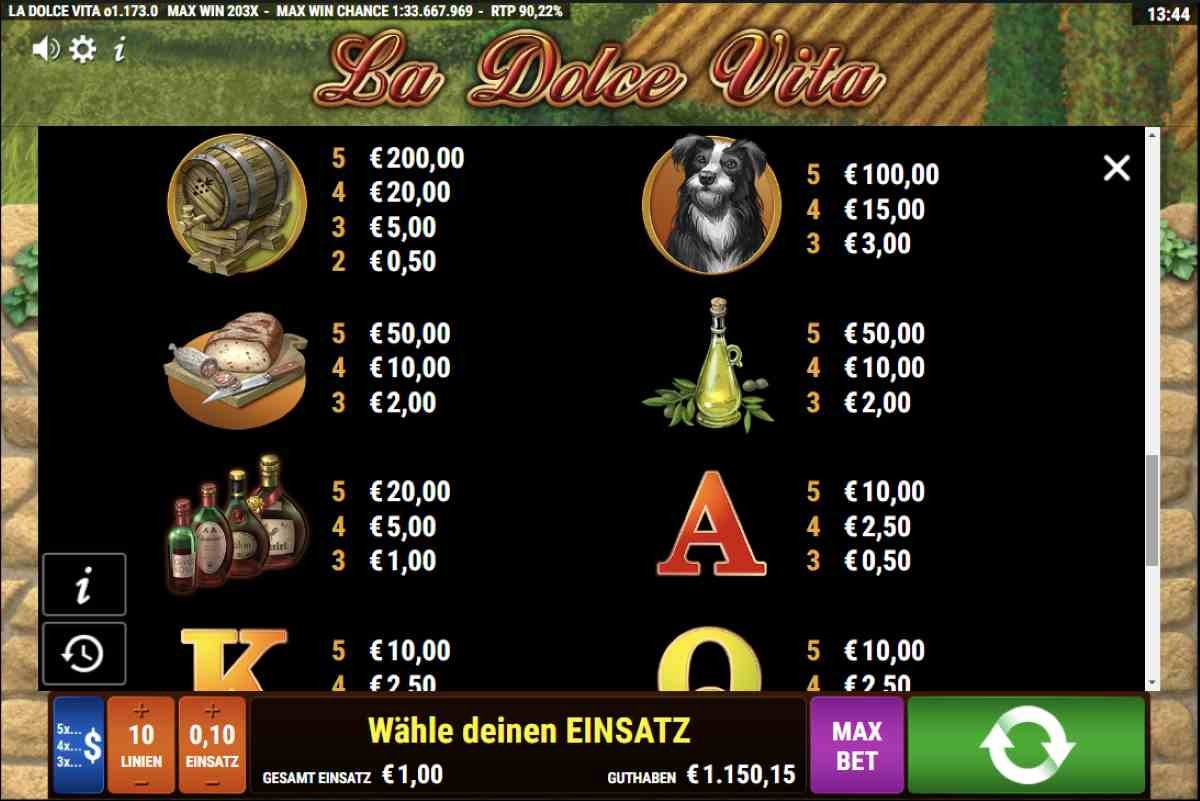
La Dolce Vita Game Review In Norway
Get an overview of game flow, risk, and limit settings before playing in Norway - only for 18+ and with breaks in 2026.
La Dolce Vita RTP: What The Numbers Say
Imagine you are considering two slots that look equally 'nice', but one feels much more unpredictable over time. Then it is useful to understand what the payout level actually means, and just as importantly - what it does not mean. The numbers are about expectation over a very large number of rounds, not about what happens tonight. Many read a single number and think it's a guarantee. It is not.
In 2026, it is smart to use numbers as a point of orientation, not as a reason to push your budget. When considering this game, think practically: How does the pace affect your choices? How often does it feel like you 'have' to keep playing to get a feature? And are you able to stop without negotiating with yourself?
In Norway, you should always play within current limits and only if you are 18+. Use control tools such as timeouts and loss limits where available, so that the numbers do not become an excuse to play longer than planned.
All promotional incentive structure is clearly stated in writing and/or via electronic means in an easily understood manner. All codes are accompanied by an explanation of what the code is for, who is eligible to use the code, and how it should be used. As such, players are less likely to be confused about what is required of them in order to receive a reward and how the reward will be applied after receiving it. The promotional incentives provided to participants provide them with time to become familiar with the gaming system's mechanics, their interface, and progress, before deciding how deeply they wish to become involved with this platform. Therefore, players are encouraged to participate in an informed manner, rather than being pressured or tempted to act quickly.
How To Interpret Risk And Variance In Practice
Imagine you're playing calmly, yet feel your mood fluctuating because payouts come unevenly. It's often variance you notice, not “luck” or “bad days.” Variance describes how winnings can be distributed: some games give several small hits, others can have longer periods with little before something significant happens. You can't control it, but you can plan for it.
The most useful exercise is simple: decide on a short test session, keep your stake stable, and notice how you react when nothing exciting happens for a while. Usually, that reveals more than a hundred quick rounds. If you notice yourself becoming impatient and starting to change your stake “just a little,” it's a stop sign, not a signal to continue.
In 2026, many players expect a slot to be entertainment, not an emotional roller coaster. Therefore, you should set boundaries before you start: a time frame, a budget, and a break plan. When you do that, the experience becomes safer, and your assessment becomes more honest.
La Dolce Vita Reviews: What People Are Actually Talking About
Imagine reading five reviews in a row, and all of them seem completely different: one loves the pace, one finds it hectic, one complains that “nothing happens,” and one says it's perfect on mobile. That's normal, because player experience is as much about habits as it is about mechanics. Therefore, you should read reviews as a map of typical experiences, not as a definitive answer.
When evaluating impressions from others, look for concrete descriptions: How easy is it to keep track of bets? How clearly are rules and features displayed? How does the pace feel in a short session? And most importantly: What routines do people use to stop in time? In 2026, “responsible gaming” is not a footnote, but part of a good review.
In Norway, 18+ applies and there's a requirement to play within current regulations. Stick to platforms that have clear tools for limits and breaks, and use them before you get carried away by atmosphere or design.
Who Enjoys the Pace
Imagine you like games that get straight to the point and don't require many choices per round. Then a tight pace can feel comfortable. But if you prefer to “think between rounds,” the same pace can feel hectic, especially on mobile when notifications and small interruptions pull you out of focus.
When assessing if this suits you, test in short bursts. Play a small series of rounds at a normal pace and stop. Ask yourself: Was it fun, or was it just a lot of clicking? Often, that question distinguishes a good session from autopilot.
What Players Notice in Features and Flow
Imagine a feature appearing, and you're unsure what triggered it. Then it's easy to create your own explanations in your head and continue to “confirm” them. Many reviews are precisely about this: how clear it is what is happening, and how easy it is to find the answer in the rules.
Make it practical: when something unexpected happens, stop after the round, open the rules, and read the relevant section. If you do that twice during the testing phase, your understanding will be much better. And the better you understand, the less tempting it will be to chase a pattern that doesn't exist.
Imagine a review only talks about “big moments” and “crazy rounds,” but says little about everyday rounds. Then it's rarely useful. Look for reviews that describe what the player actually does: adjusts bets, sets stop points, takes breaks, and ends the session neatly.
Also, keep a cool head when you see strong opinions. Some play in long sessions, others in short. Some tolerate fluctuations, others become restless. A good review helps you place yourself in the picture, not “win the argument.”
Imagine you want to know if you like this without spending more than ten minutes. Do a mini-test: play calmly for a few rounds, change your stake once, and play a few more rounds. Then stop and assess if you still have control over time and stake.
If you notice you already want to continue “to see if something happens,” take a break. That reaction is information. It tells you how the game affects you, and that's exactly what you're supposed to test.
Practical Steps to Play Safely in Norway
Imagine you've decided to try with real money, but you want to avoid stress later. Then you should build a simple sequence: account first, security next, limits before deposit. Many do the opposite because they want to get started, and end up sorting things out in the middle of the session.
In Norway, it's particularly important to respect 18+ and actively use responsible tools. You don't need to discuss licenses or details you can't verify. You need routines that work in practice: a clear start, a clear stop, and a system that prevents impulsive top-ups.
Registration and Age Verification Without Friction
Imagine you want to withdraw money later, but you're stopped because the account needs to be verified. This often happens when people postpone the “boring” steps. Do it early instead: fill in information correctly, choose a strong password, and activate extra login verification if available.
Keep the account private. Log out after the session, and avoid saving login details on shared devices. It's a simple way to ensure that 18+ is actually followed at home.
Limits That Make It Easy to Stop
Imagine saying “I'll just play a little,” but you notice time slipping away. Limits are designed precisely for that moment. Set a time frame before you start, and decide on a session budget that is realistic for you. Keep it simple: one time limit, one money limit, and one stop sign.
When the stop sign comes, you stop. Don't argue with yourself. If you need extra help, use a timeout. It removes the choice when you are most impulsive.
|
Checkpoint |
What You Set Up |
Why It Helps |
|
Session Budget |
Maximum amount per session |
Prevents small top-ups from becoming large |
|
Time Frame |
Alarm or session timer |
Breaks “just one more round” |
|
Deposit Cap |
Daily/weekly limit |
Reduces impulse payments |
|
Loss Limit |
A clear stop level |
Prevents chasing losses |
|
Timeout |
Pause for hours or days |
Provides calm when emotions take over |
Deposit With a Plan, Not Emotion
Imagine you've just had a good round and feel you should "capitalize on the momentum". That's a classic trap. Deposits should happen before the session, not in the middle of it. Decide the amount with a clear head, and treat it as the price of entertainment - not as a tool to change your mood.
If you notice you want to increase your bet because you're annoyed or impatient, stop. Take a break, and reconsider later. In practice, it's often the most responsible decision you can make.

Mobile, Withdrawals And Customer Support In 2026
Imagine you're playing on mobile, everything is fast-paced, and you're interrupted by messages. That's one reason why 2026 is more about routines than "tips". Choose the platform where you maintain the best control, and make your gaming environment calm before you start.
When it comes to withdrawals and support, the same rule applies: don't take important steps under stress. End your session first, read the instructions calmly, and contact customer support with specific details if something gets stuck.
Mobile Experience Without Distractions
Imagine you're playing on the go and the internet is a bit choppy. Many then press too quickly and get frustrated. The solution is simple: play when you have a stable connection, mute notifications, and close apps in the background. Short sessions also make it easier to stick to your plan.
If you notice you become more impulsive on mobile, play on a larger screen at home instead. It's not "better" to play on mobile if you lose control because of it.
Payment Choices And A Fixed Routine
Imagine you're constantly changing payment methods and becoming unsure of what's happening where. That creates unnecessary stress. Choose one method you understand and stick to it. This will make it easier to keep track of deposits, balance, and planned limits.
Avoid making payment steps when you are distracted. If you don't have enough calm to double-check amounts and confirmations, you don't have enough calm to make a good decision either.
Withdrawals Without Haste
Imagine you want to withdraw money at the end of the evening, but you're tired and click too fast. End the session first. Then go to withdrawals, choose a method, and follow the steps at a calm pace. Don't change methods midway without a good reason, as it can create extra checkpoints and more waiting.
If something seems unclear, stop and ask customer support. Precision beats haste, especially when you want to avoid misunderstandings.
Customer Support When Something's Amiss
Imagine something is stuck, or you're unsure about an account setting. Don't click blindly. Note the time, device, and what you did right before the problem occurred. Then contact customer support with a brief, fact-based explanation.
Many get better help when they write concretely: "I tried to set a limit, but it's not saving" is better than "it's not working". And if you notice irritation building up, end the session. Irritation leads to poorer choices.
Summary For Players In Norway
Imagine you want to end a session feeling in control all the way. Then you don't need more "tricks". You need a simple plan: test in short segments, read rules when something is unclear, set limits before you bet, and stop when the stopping point comes.
In Norway, 18+ applies and the expectation of responsible gaming. Choose tools that actually help you take breaks and stick to your budget, and use them before you get overexcited. In 2026, it is precisely these habits that distinguish a smooth experience from an evening that gets out of hand.
Next Step: How To Test With A Cool Head
Imagine you want to make a decision in ten minutes. Do a mini-test at a calm pace, change your bet once, and stop to assess how you react to fluctuations. If you feel restless, take a break and come back later.
When you can say "I understand what's happening, and I stop when I want to," then you have both evaluated the game and built safer routines.
FAQ
How do I find out if the game suits me?
Start with a short test session and decide in advance how long you will play. Imagine you are trying a new activity - you will want to get a feel for the rhythm before you speed up. Play calmly, stop after a few rounds, and check if you still have an overview of your bets and time. If you notice yourself just clicking on, it's a sign that you should choose shorter sessions or a calmer game.
What does payout mean in practice for a typical session?
It describes expectations over many, many rounds, not what happens tonight. Imagine an average over a long period – it says something about the construction, not about the next result. Therefore, you should use the numbers as a reference point and plan your budget and breaks regardless. When you do that, the experience becomes more stable and less driven by emotions.
What limits should I set before making a deposit?
Set a session budget, a clear time frame, and a stop sign for losses or irritation. Imagine the budget is the price of a ticket - once it's used, the session is over. Keep limits realistic, otherwise you won't follow them. And remember that 18+ always applies in Norway, so your account and device should be secured.
What do I do if I start chasing losses?
Stop the session immediately and take a break long enough for the stress to subside. If you think "just a little more", it's often emotion driving you. Change activity, take a walk, or do something that breaks the pattern before you consider playing again. If this happens often, use a timeout or a longer self-exclusion period to remove the temptation in the moment.
Is mobile gaming safe when I'm out?
It can be safe if you have a screen lock, stable internet, and short sessions with a defined end point. Imagine you get interrupted by messages - then the risk of impulsive choices and misclicks increases. Mute notifications, close apps in the background, and stop if you get annoyed by the technology. Calmness is an underrated safety factor.
When should I contact customer support?
Contact customer support when something is unclear regarding your account, payment, or technical errors, and be specific. Note the time, device, and what happened right before the problem occurred, so you avoid unnecessary follow-up questions. Short facts provide faster help than long explanations. And if you feel stressed, end the session first and have the conversation calmly.
How do I know I should stop for the day?
If you can't explain why you're still playing, or you notice irritation and haste, that's a clear stop sign. Imagine you're continuing just to "turn it around" - that's rarely a good plan. End the session, take a break, and only come back if you still want to play within your budget and time frame. Stopping early is often the strongest skill you can have.